Links for the Weekend (2026-07-24)

Each Friday, I’ll post links to 3–5 resources from around the web you may want to check out.

Scattered

Melissa Edgington writes about being scattered in motherhood. I’m sure all parents can relate!

One thing I know about motherhood is that it never stops pressing me into my Savior’s side, whether I run to Him with a crushing hug of gratefulness and praise or I fall into His arms in desperation or even a longing for what used to be but isn’t anymore. While my family shifts and changes around me, Jesus stays right where’s He’s always been. When I’m scattered, He gathers. When I feel shaky, He reminds me there’s solid ground beneath my feet. When I’m teary-eyed in the kitchen, He fills my mind with good things. And when my children strike out into the world, He gets into the boat with them.

Five Myths That Keep You From Reading the Institutes

Have you read John Calvin’s Institutes of the Christian Religion? (I haven’t!) Anthony Faggiano thinks that some people resist reading this influential book because they have believed myths about it, and he’s here to correct those misconceptions.

I expected dry. What I found was closer to binge-worthy; I’d reach the end of a chapter and find it almost impossible not to begin the next. Six months later I had worked through the whole thing slowly enough to underline the key points, which turned out to be more than half the book.

Grave

Our poem of the week: Grave, by Kate Bluett. This poem puts the raising of Lazarus and the resurrection of Jesus together in the mind of one of the disciples. The last line is wonderful!

On the WPCA Blog This Week

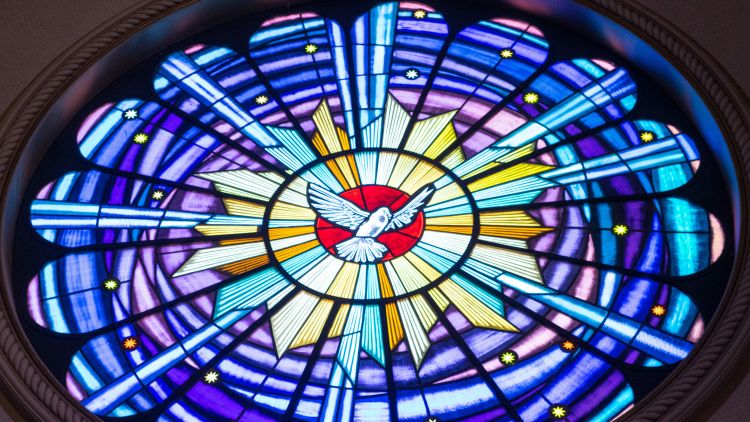
This week on the blog we published an article I wrote called 10 Truths About the Holy Spirit from Romans 8. If you haven’t already seen it, check it out!


Note: Washington Presbyterian Church and the editors of this blog do not necessarily endorse all content produced by the individuals or groups referenced here. 

10 Truths About the Holy Spirit from Romans 8

Romans 8 is a favorite chapter of the Bible among Christians, and for good reason. It is encouraging, memorable, and oh-so-quotable.

But because it is so beloved, it is easy to lose the main ideas of the chapter among the glorious promises. To be specific, what would you say Romans 8 is all about?

The Frequency of the Spirit

When we start to observe the text of Romans 8, one phrase jumps out. The Holy Spirit is all over this chapter!

A quick count reveals that the word “spirit” appears 22 times in Romans 8. This is the most that word appears in any chapter of the English Bible! (I made these counts and comparisons using the ESV.) This was unexpected for me, because I don’t often see people reach for this chapter to teach about the Holy Spirit.

Is the Holy Spirit the main subject of Romans 8? In my friend Peter’s post on Romans 8:28, he provided an outline of much of this chapter, so I won’t repeat it here. Even if the Spirit is not at the center of this chapter, he is indispensable to its main ideas.

What Can We Learn About the Spirit?

I thought it might be instructive to exercise our observation and interpretation muscles in a brief look at Romans 8. While focusing mostly on the occurrences of the word “Spirit” in this chapter, I’ll list some truths that are relatively straightforward from the text.

  1. The Spirit is the “Spirit of life.” In contrast to the “law of sin and death,” which condemns, the Spirit’s law sets us “free in Christ Jesus” (Rom 8:2).
  2. The Spirit is opposed to “the flesh.” Christians walk according to the Spirit, not the flesh. They live according to the Spirit and set their minds on the things of the Spirit instead of living according to or setting their minds on the things of the flesh. The flesh brings death, but the Spirit brings “life and peace” (Rom 8:4–6).
  3. Those with the Spirit belong to God. Those with the Spirit are “in the Spirit.” Without the Spirit of Christ you do not belong to God. Having the “Spirit of Christ” and having Christ in you appear to be the same thing (Rom 8:9–10).
  4. Those with the Spirit will rise from the dead. If you have the Spirit that raised Jesus from the dead, that same Spirit will give you the same result (Rom 8:11).
  5. We need the Spirit to “put to death the deeds of the body.” The parallel structure of Romans 8:13 also implies that putting deeds to death by the Spirit is what it means to live according to the Spirit.
  6. All who are led by God’s Spirit are God’s children (Rom 8:14). Part of what it means to have God’s Spirit (Rom 8:9) is to be led by God’s Spirit.
  7. The Spirit we have received is the “Spirit of adoption.” This Spirit is contrasted with a spirit of slavery which leads to fear; the Spirit of adoption produces affectionate cries (“Abba!”) to our Father (Rom 8:15).
  8. The Spirit testifies that we are God’s children. The Spirit “bears witness” along with our spirits that we are children of God. And as children, we are “heirs of God and fellow heirs with Christ” (Rom 8:16–17).
  9. We have the first fruits of the Spirit. Having the Spirit in this way causes us to groan inwardly along with the creation, as we await our adoption as children of God (Rom 8:23).
  10. The Spirit intercedes for us. In our weakness, we don’t know how to pray as we should. But the Spirit helps us, praying with groans that are too deep for words. Because the Father knows the mind of the Spirit, he receives what is in our hearts (Rom 8:26–27).

Observation Leading to Understanding

Observation is necessary but not sufficient for understanding the Bible. It is a means, not an end. Observing the Bible is like gathering sticks for a fire: Without the wood, there’s nothing to burn; but the sticks themselves produce neither heat nor light.

But these observations and interpretations about the Holy Spirit help us toward the main point of Romans 8. We see how the Spirit marks and indwells God’s people, identifying them as his beloved children. This relationship with God produces suffering with our fellow heir (Jesus), but glory with him as well.

Post credit | Photo credit

Links for the Weekend (2026-07-17)

Each Friday, I’ll post links to 3–5 resources from around the web you may want to check out.

God Believes In Rest. Do You?

Tim Challies wants to persuade you to rest.

But God also gives us rest for practical, physical purposes. He gives us rest because we are weak. He gives us rest because we are finite. He gives us rest because we need it and simply cannot thrive without it. We can do more good, bring more blessing, and better serve his cause if we rest. He gives us rest because he loves us, because he cares for us, and because he wants what is best for us. The fact is, God is a big fan of rest!

Did God Command Genocide in Deuteronomy 7?

Read this one with your Bible open! Andrew Wilson takes up the criticism that God commanded the Israelites to commit genocide as they entered the promised land.

Many people today find Deuteronomy 7 to be the hardest and most troubling chapter in the entire Bible. We may struggle theologically, with how to square these commands with the all-good and all-loving God we meet elsewhere in Scripture (not least in Deuteronomy itself!). We may struggle historically, with whether and to what extent Israel followed through on these commands in the books of Joshua and Judges.

Of hearts and wine and smartphones

Our poem of the week: Of hearts and wine and smartphones, by Thomas McKendry. This is the sort of poem that has you nodding your head to the evocative images throughout and then, at the end, you find your breath taken away.


Note: Washington Presbyterian Church and the editors of this blog do not necessarily endorse all content produced by the individuals or groups referenced here. 

Links for the Weekend (2026-07-10)

Each Friday, I’ll post links to 3–5 resources from around the web you may want to check out.

‘I’m Not Feeling It Today’: Bad Reasons We Neglect the Bible

David Mathis writes about the relationship between spontaneity and habit and how this relates to Bible reading. He advocates “planned spontaneity” and gives five practical suggestions.

Joy in God’s presence disappears when I don’t make a habit of pursuing his presence. Daily communion with the living God doesn’t just happen as we go about our daily lives. Setting our minds on things above doesn’t just happen. God means for us to take some initiative and put in a little effort to do the mind-setting and heart-calibrating, and in those arrangements God loves to bless his people with surprising showers of his grace that have all the joy of the best spontaneity.

The Value of Spiritual Disciplines

Jennifer Weichmann writes about how being a runner has informed her understanding of practicing spiritual disciplines.

Like we can see the effects of a habit across years of practice, spiritual disciplines operate the same way. As consistent running makes the runner stronger and faster, so also a disciplined believer strengthens their faith across time through habits like prayer and Bible reading, and also through the easier to dismiss habits of Scripture memory, fellowship, and fasting. These rhythms of spiritual disciplines matter because habits build, habits sustain, and habits drive.

Lassitude

Our poem of the week: Lassitude, by Mark Rico. This poem is (to me) an on-the-nose description of how July heat feels.

On the WPCA Blog This Week

This week on the blog we published an article written by Cliff Lester called The Grace of Thinking Soberly. If you haven’t already seen it, check it out!


Note: Washington Presbyterian Church and the editors of this blog do not necessarily endorse all content produced by the individuals or groups referenced here. 

The Grace of Thinking Soberly

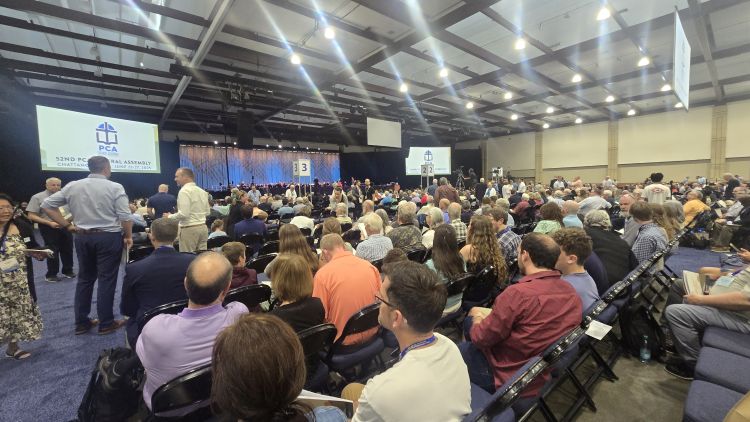
I recently attended the General Assembly of the Presbyterian Church in America, our church’s denomination. General Assembly—or GA for short—is the annual gathering of church leaders, elders, and representatives of the PCA, along with their families and guests. This year, there were over 2,400 Commissioners, the Teaching and Ruling Elders who handle the business of the PCA.

For the second year, I was privileged to attend GA as one of those Commissioners. There is a joy (some might call it a twisted joy!) in listening to the various reports, being a part of the discussions, hearing both sides of an argument, and operating within the polity and practice of the PCA. However, for a rookie like me, GA can feel overwhelming. The decorum that brings joy can also be challenging. The opinions in my head do not always come out in thoughtful, well-spoken ways. Simply put, it’s easy to feel like a small fish in a big sea.

Thinking Soberly

In Romans 12:3-8 Paul writes:

3 For by the grace given to me I say to everyone among you not to think of himself more highly than he ought to think, but to think with sober judgment, each according to the measure of faith that God has assigned. 4 For as in one body we have many members, and the members do not all have the same function, 5 so we, though many, are one body in Christ, and individually members one of another. 6 Having gifts that differ according to the grace given to us, let us use them: if prophecy, in proportion to our faith; 7 if service, in our serving; the one who teaches, in his teaching; 8 the one who exhorts, in his exhortation; the one who contributes, in generosity; the one who leads, with zeal; the one who does acts of mercy, with cheerfulness.

Paul’s primary concern is that everyone should not think of himself (or herself) more highly than he ought. This is for good reason, because we all struggle with pride in one way or another. We struggle with self-importance, self-sufficiency, self-promotion, and more. (I’ll note that all of those are about me and myself.)

Then Paul says that we need to “think with sober judgment” about ourselves. This includes the aforementioned caution of thinking too highly of ourselves. But, it also includes the opposite: thinking too lowly of ourselves. We may think we have nothing to offer God’s people or we struggle with anxiety about how our work within the church could fail. Maybe we compare ourselves to others, thinking we could never measure up to the standard they possess.

Paul reminds the Romans, and through Scripture he reminds us, that God has assigned us all a measure of faith and he has gifted us all in different ways and we should use those gifts! We are all part of the body and within that body, one man’s “eye” is as valuable as one woman’s “ear” and those are as valuable as my “big toe.” My gifting might seem insubstantial, but thinking soberly means understanding that, without my “big toe” the body would walk slower and be off-balance and unstable.

Back to GA

I enjoy GA and, at times, I feel like a sponge soaking everything up. But then I see some of the older, respected guys and feel inadequate. Perhaps the day will come, Lord willing, when I will know the Book of Church Order front to back and understand the church’s polity, but today is not that day!

But I’m on equal ground here, inexplicably. I was called and sent to serve and represent WPCA at General Assembly and I trust that I’m using my gifts for the building up of the body, both locally and denominationally. That provides motivation to serve well now and to strive to grow in order to better serve in the future. Because serving well means thinking soberly about who I am in Christ as I seek to serve the body for the glory of God.

Photo credit: Cliff Lester
Links for the Weekend (2026-07-03)

Each Friday, I’ll post links to 3–5 resources from around the web you may want to check out.

What It Means That Christ is Praying for You Today

Dave Harvey explains how Christ’s work continues for us after his ascension.

And our Advocate isn’t distant. He’s not working remotely from some heavenly retirement home. He’s seated next to the Father, pleading our case, defending us against every accusation, and interceding for us day and night.

I Thought Healing Would Look Different

Kirsten Black writes about how grief tends to have a starting point but no obvious end point.

Healing doesn’t look like I thought it would. Before loss, I assumed healing meant the hard days would resolve; that there would be an end to the sadness. Now I realize that healing is learning to honor the sorrow when it returns. It reminds my heart that because of Christ, there is still hope, even when the sadness remains. It speaks to my still-aching heart, reminding her life is not as God intended it to be, yet the life to come will be exactly how he planned. And then it patiently waits for the sun to rise, knowing that sorrow will not have the final word.

Let All Mortal Flesh Keep Silence

Our poem of the week: Let All Mortal Flesh Keep Silence, by Megan Willome. This is a very short poem about the difficulty we have with silence.


Note: Washington Presbyterian Church and the editors of this blog do not necessarily endorse all content produced by the individuals or groups referenced here.