
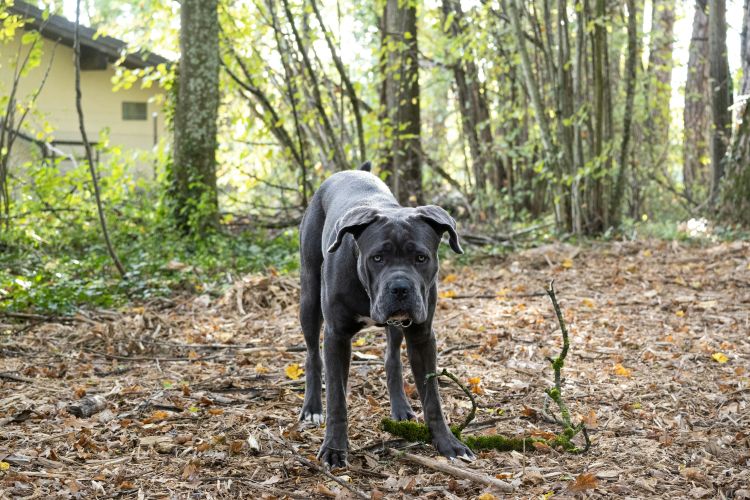
There once was an old and nasty man. He lived on the edge of town in a house that was an embarrassment to his neighbors, though he felt no shame. His yard was often filled with trash and always staked with signs which made it clear that visitors were unwelcome.
As he aged and drove everyone from his life, the man grew lonely (though he would not have used this word). So the man bought a dog. When the dog arrived at the house he was muscular and fast but sweet and playful. The dog would not be kind and affectionate for long.
The man quickly trained the dog to be as nasty as he was. Through beatings, neglect, and other harsh punishments, the man shaped the dog into a vicious animal. The dog snarled and lunged at everyone who came close and attacked any animals within reach. Though the dog was bound to a chain staked in the yard, everyone who saw the dog stayed far away. This dog was one hundred plus pounds of muscle and teeth and there was little reason to think the chain would hold if the dog wanted to attack.
The dog was loyal to the man because he had no choice and knew no better. The man ruled the dog with great cruelty; he considered the dog a weapon and tool and treated him with all the affection one might have toward a rubber mallet. The dog did whatever his master wanted because his life depended on it.
After a few years, the nasty man died, and the man’s three children were notified. He had driven them away long ago, and while they weren’t surprised to see the state of his home, everything there was a reminder of a sad chapter of their lives. Their mother had cut off contact with her ex-husband years before, and they didn’t blame her.
After the house was emptied and listed for sale, the siblings prepared to return to their homes. The only question that remained was what should happen to the dog. While they were working on the house, they moved the dog to a shed in the back yard, but they went nowhere near him. He was as mean as ever.
The two younger siblings lived in city apartments and had no space for a large pet. The oldest son lived on two acres in a nearby county. He owned dogs in the past and had a soft spot for mistreated animals. Yet he wasn’t optimistic. He decided to give the arrangement three months; after this, he would either keep the dog or take him to a shelter.
At first, the situation seemed impossible. Because the dog was far from everything familiar, he lashed out at everyone. The son fed the dog by putting food in a bowl and sliding it forward with a broom. No one in the house was able to sleep because of the dog’s constant barking and his efforts to destroy everything.
As the second week turned over into the third, however, something strange began to happen.
On some mornings, the son would go out to feed the dog and the barking would stop for a few minutes. He spoke soothingly to the dog, using his new name, and the dog looked just quizzical instead of murderous. When the family arrived home in their car, the dog stood quietly behind his fence with his eyes on the garage. Little by little, the meanness of the dog was melting.
Sure enough, after four weeks the son was finally able to touch the dog without fear. In the sixth week, he gave the dog a much-needed bath. The dog learned some simple commands. The son’s wife was not yet ready to let the dog into the house, but the wagging tail was a welcome and surprising sign of good things to come.
By the time the third month came to an end, the decision to keep the dog was easy. The son’s patient, kind treatment of the dog had transformed the animal from a nightmare into a happy, rambunctious pet.
Because the dog had so many bad behaviors to change, the son tried to keep the long view in mind. At the park, he had to correct the dog frequently. The dog still had an impulse to attack, but it was decreasing. The nasty man had given the dog no choice but to harm and intimidate, but the son was teaching the dog, over time, how to make friends.
A year after the nasty man died, the dog was hardly recognizable. He bounced around the yard with his family, no longer kept behind a fence for safety. When the family came home, he greeted them with kisses and snuggles, and he was especially excited to see the children. The son invited friends to the house without fear of the dog harming or scaring anyone.
The dog had once depended on the nasty man, but he now was loyal to the son. He was no longer forced to be mean; he was now free to be playful and silly. And while he would not have used this word (because whoever heard of a dog using words?), the dog now knew that he was loved.
For sin will have no dominion over you, since you are not under law but under grace. (Romans 6:14)


- Links for the Weekend (2026-03-27) - March 27, 2026
- Links for the Weekend (2026-03-20) - March 20, 2026
- 3 Poor Reasons to Read the Bible - March 18, 2026